
Shipping Instructions
Shipping damage is a reality every musician has to plan for — and in most cases it’s avoidable. When you send us an instrument for work, please follow these steps as closely as possible. Pack it like it’s plutonium encased in a porcelain kitten.
Step by Step
Secure loose slides
Tie down the 1st and 3rd valve slides, and any other loose slides, with pipe cleaners, hair bands or something similar. Fig. 1
Wrap the instrument
Using large-cell bubble wrap, wrap the instrument firmly from crook to bell Fig. 2–3, rolling the sheet end to end until you have about 2–3" of bubble coverage at the crest of the bell crook and across the edge of the bell rim Fig. 6. If you have them, place air pillows at the bell flare and crook ends before you finish so they’re wrapped in with the bubble wrap Fig. 4–5. Secure the ends with packing tape.
Protect the valves, bell and receiver
Depress the valves and fold one layered edge of the bubble wrap across the valve buttons Fig. 7, then fold the opposite edge over it and tape it down firmly in the center Fig. 8. Do the same at the bottom valve caps, and tape across the bell throat and leadpipe receiver Fig. 9. Repeat these steps across the bottom of the instrument.
Choose the right box
Pick a box — double wall if possible — big enough to leave about 4" of space between every edge of the wrapped horn and every inside wall of the box (a little less at the ends if you used air pillows). A 26" × 12" × 14" box is ideal.
Suspend it in packing peanuts
Center the wrapped instrument in styrofoam peanuts, keeping an even amount of space between the horn and every wall of the box Fig. 10. Top off the box with peanuts, filling in firmly around the horn.
Important
Never ship your horn in a case of any kind — wooden or otherwise.
Figures
Match each figure to the steps above.
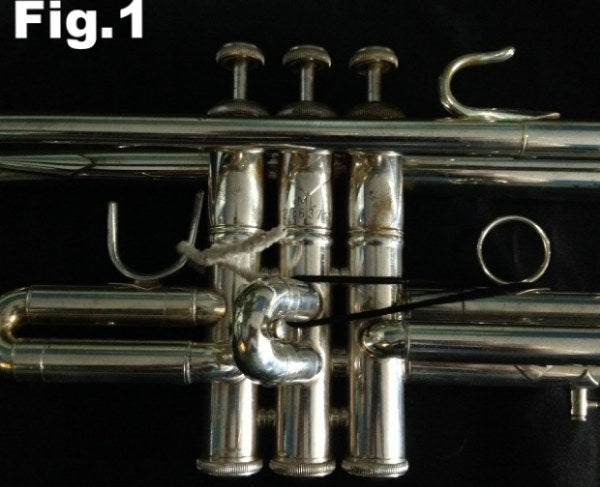
Fig. 1
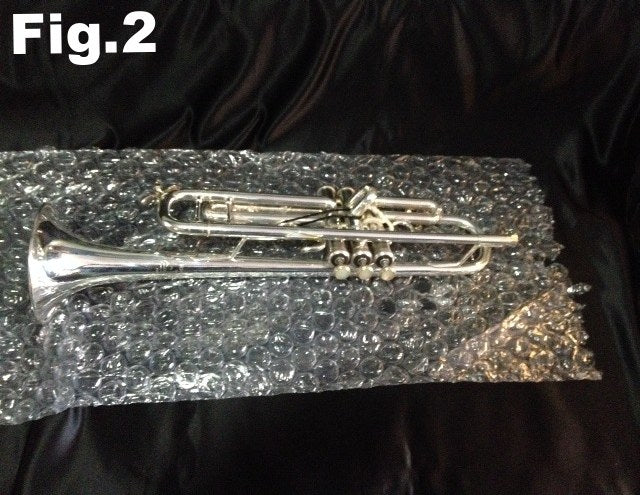
Fig. 2
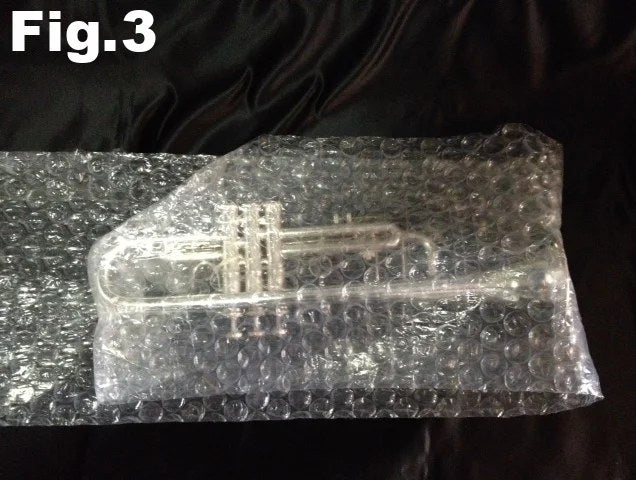
Fig. 3
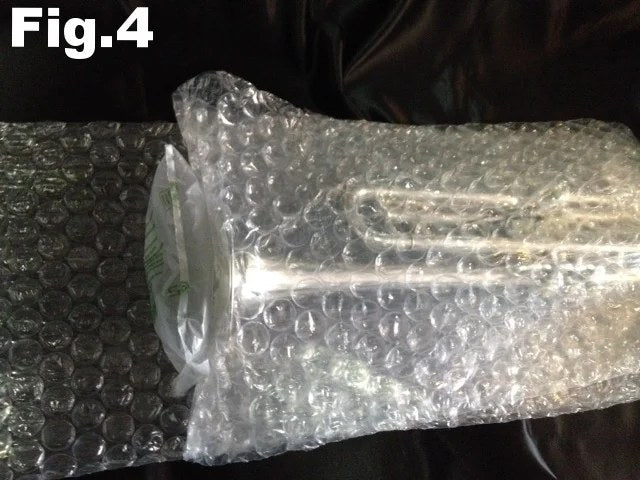
Fig. 4
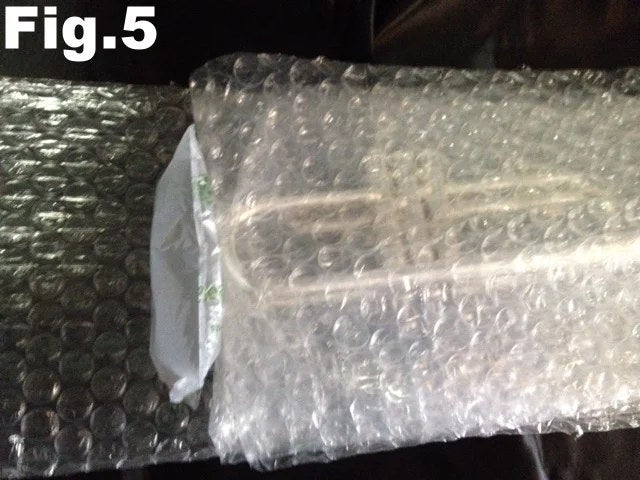
Fig. 5
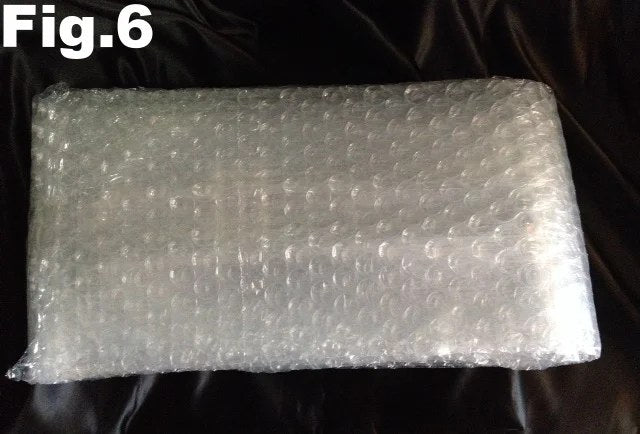
Fig. 6
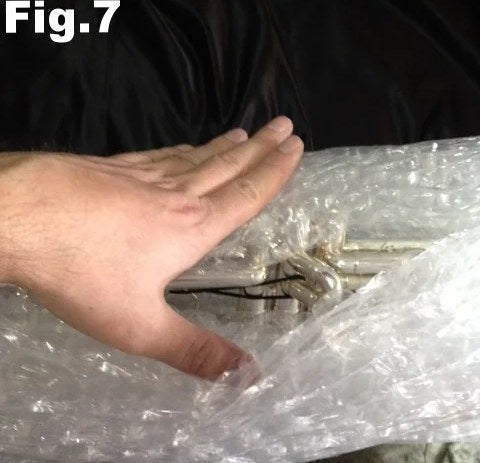
Fig. 7
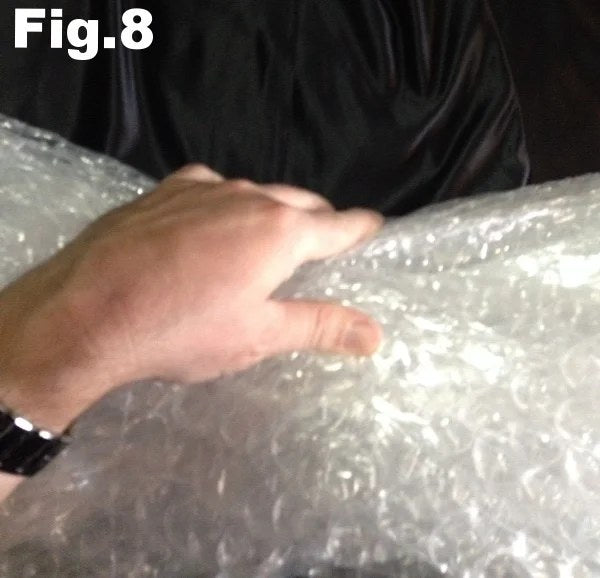
Fig. 8
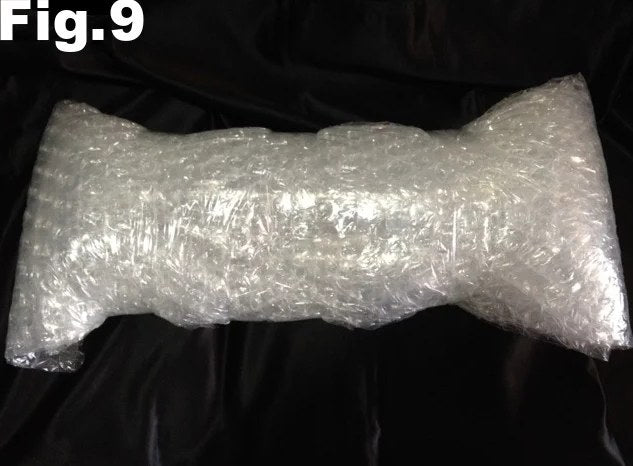
Fig. 9
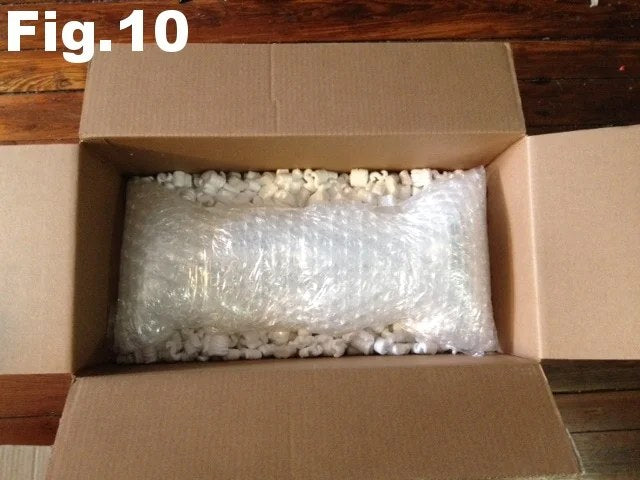
Fig. 10
Label It Fragile

Mark every side of the box clearly as fragile musical instruments.